Snorkelling Guide: Why is the Maldives perfect for a Snorkelling Holiday?
The Maldives, with over 1190 islands all set upon coral reefs and hundreds more easily accessible reefs to explore, has long been the dream destination for both snorkelling and scuba diving holidays.
The Maldives, with over 1190 islands all set upon coral reefs and hundreds more easily accessible reefs to explore, has long been the dream destination for both snorkelling and scuba diving holidays. Whether you are travelling as a couple or as a group of friends or families, the perfect resort or island is here waiting for you to discover it!
On many islands, as you swim out towards the edge of the lagoon, just below the surface of the water, you will find a vibrant underwater world filled with life and creatures that inspire awe and amazement. Beyond house reef snorkelling, you will find many resorts offer excursions to see manta rays, whale sharks and more wonders across the big blue Indian Ocean. Snorkelling at night is also something worth experiencing during your stay. Our guide explains how to enjoy the different types of snorkelling you can experience here in the Maldives, all in safety and comfort!
Before you continue reading…
Maldives.com is a fully Maldivian travel agency with decades of destination expertise. Our expert travel advisors are local Maldivians with deep knowledge of our islands and strong relationships with resorts nationwide, enabling us to secure the best rates for our guests.
We offer comprehensive packages for hotels and resorts in the Maldives. To provide you with the most reliable information, all our articles are written independently by experienced writers and rigorously fact-checked by our editors for accuracy.
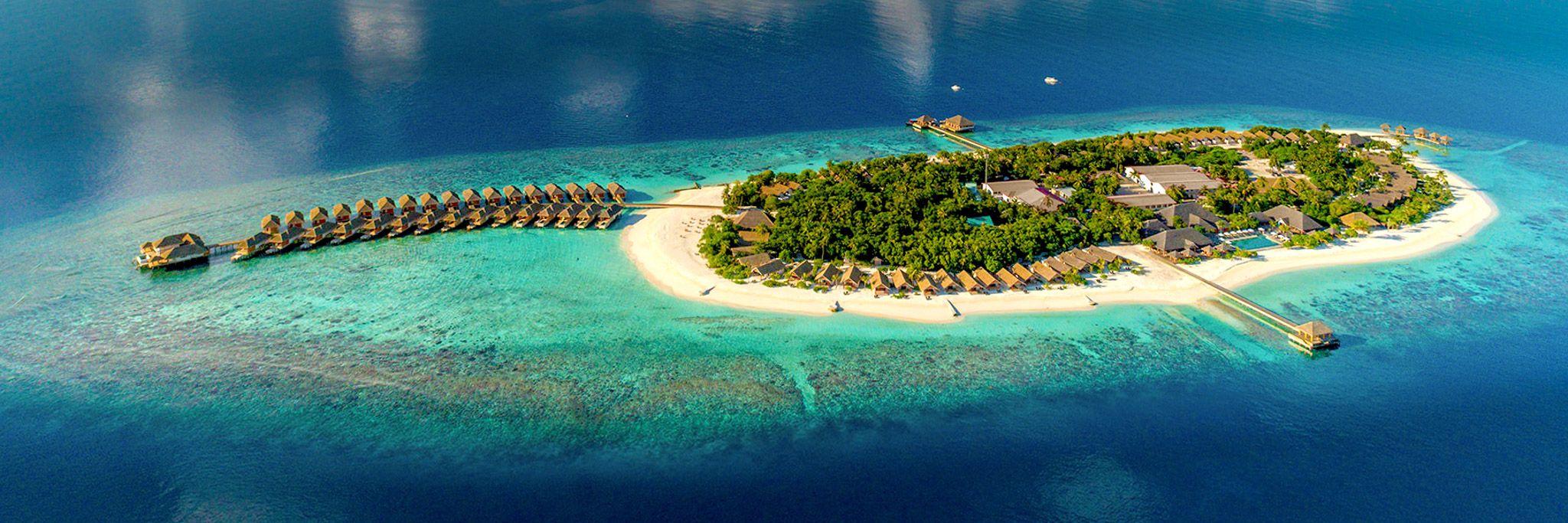
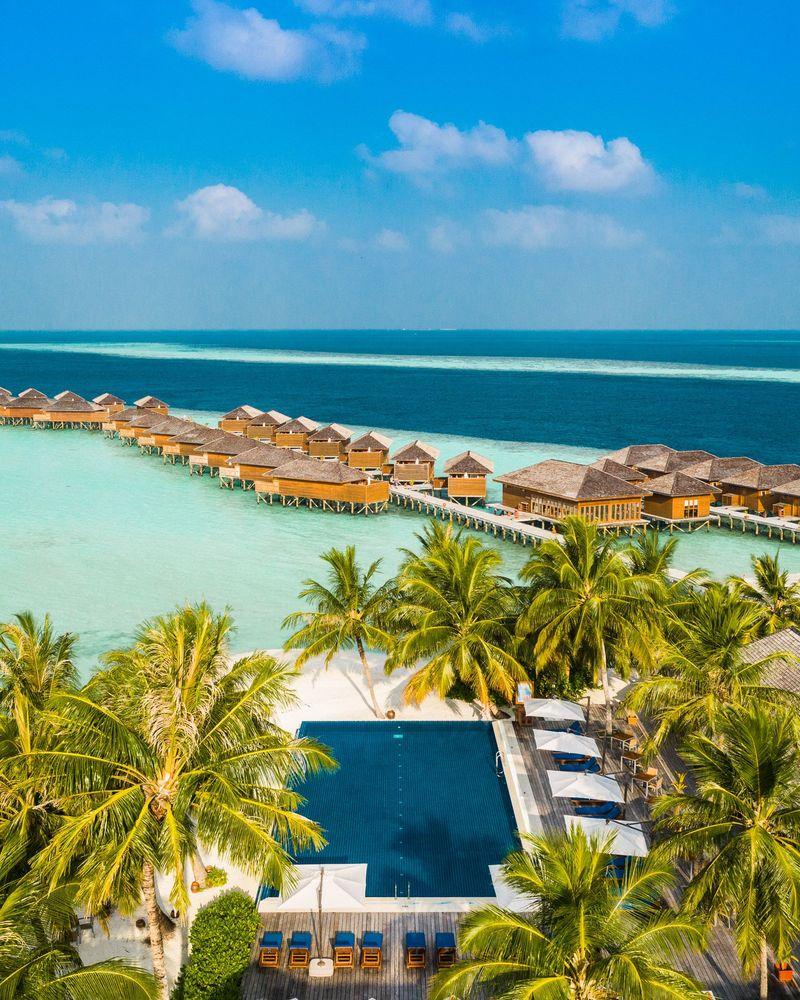
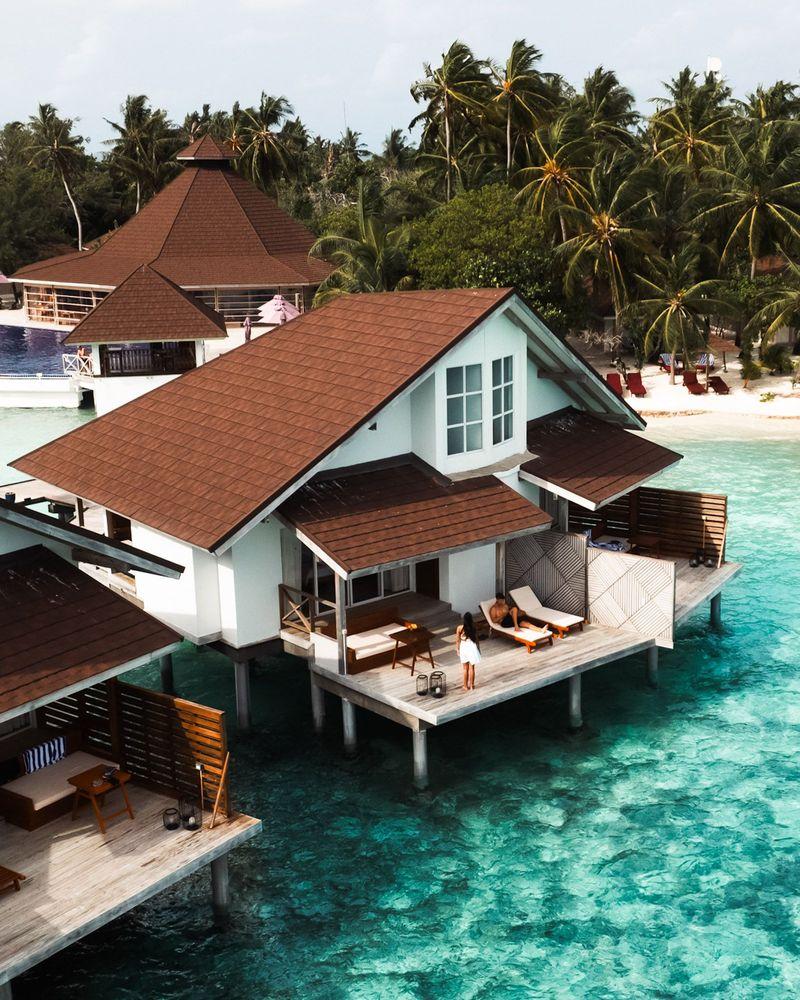
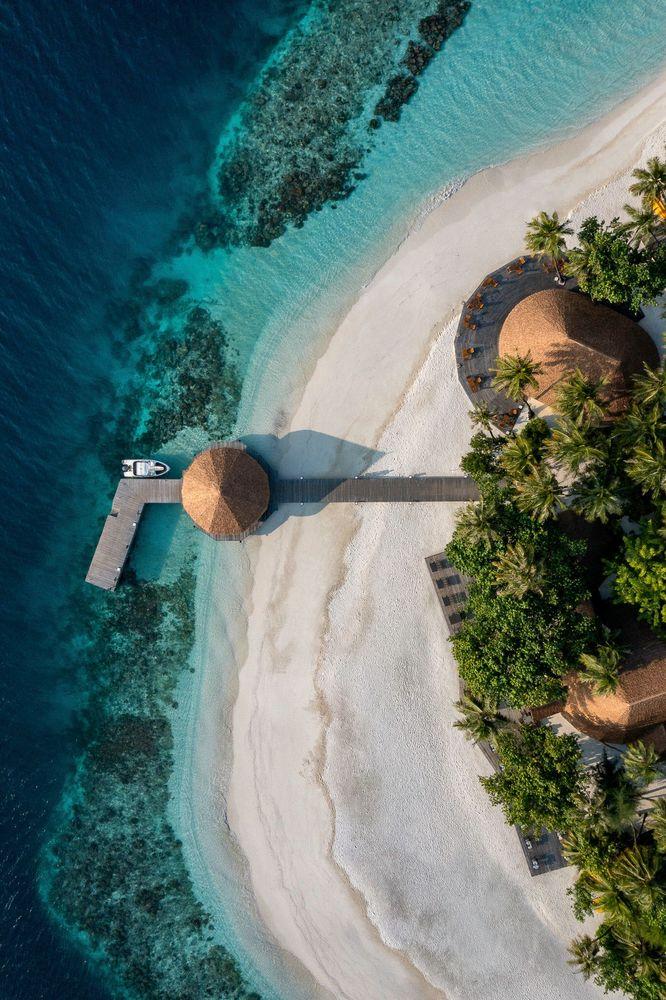
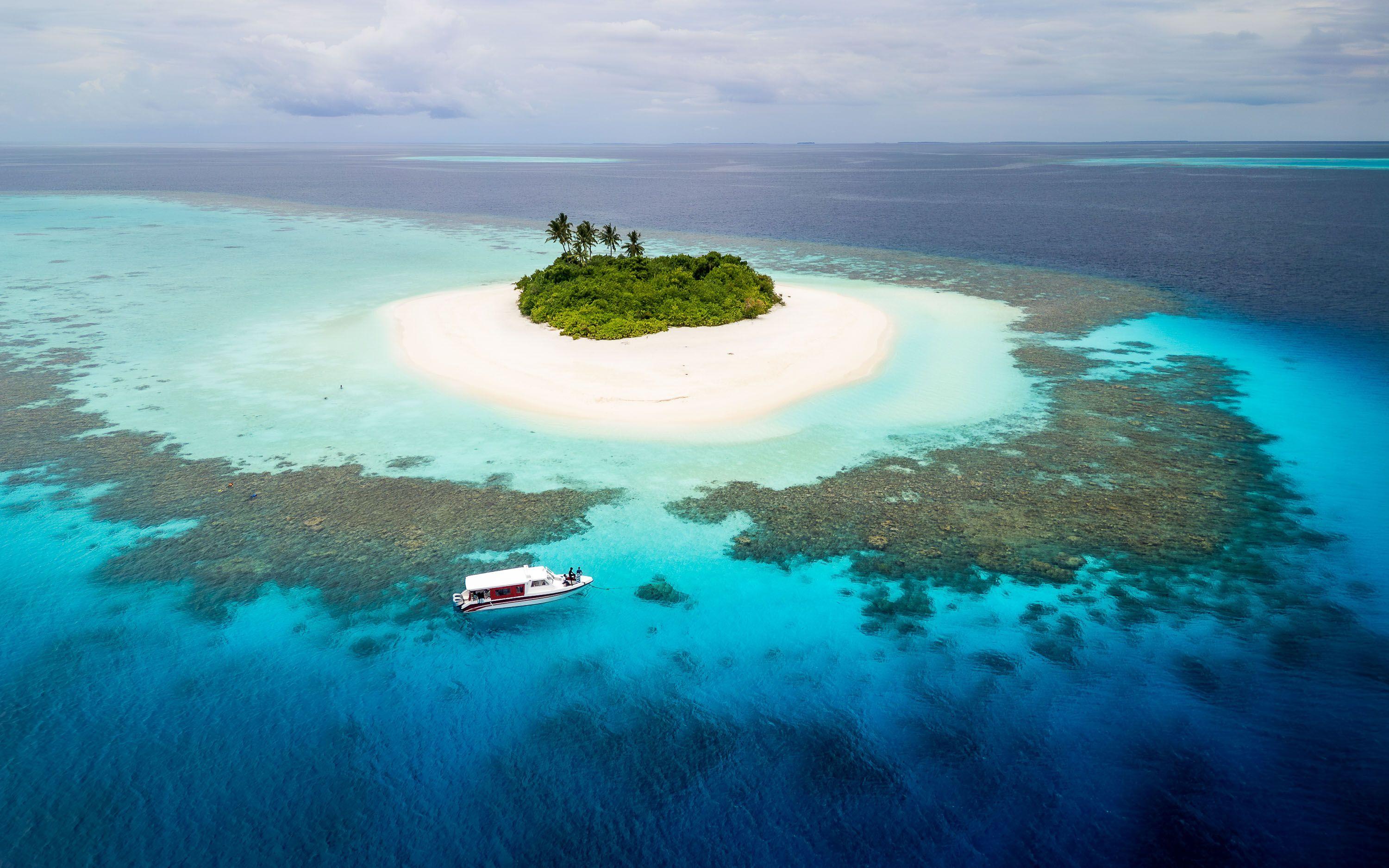
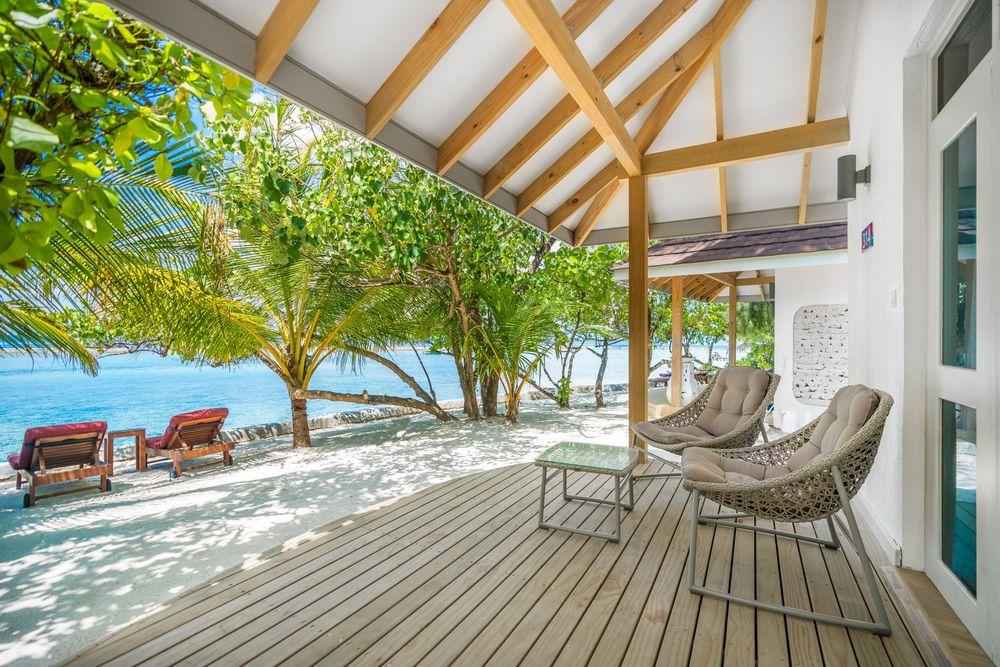
A house reef is a coral reef that is easily accessible from the beach or water villas without the need for a boat. Coral outcroppings usually form 3 to 10 metres from the beach and continue to the reef's edge, where the ocean meets the lagoon. The resort below is fringed by corals around the beach, and the reef's edge is close to the shoreline too, making it a resort with an easily accessible house reef:
No two islands are exaclty the same and the location of the reefs edge and best location for snorkelling can vary from island to island below is a list of resorts with easiliy accessible house reefs:
Does every resort have a house reef?
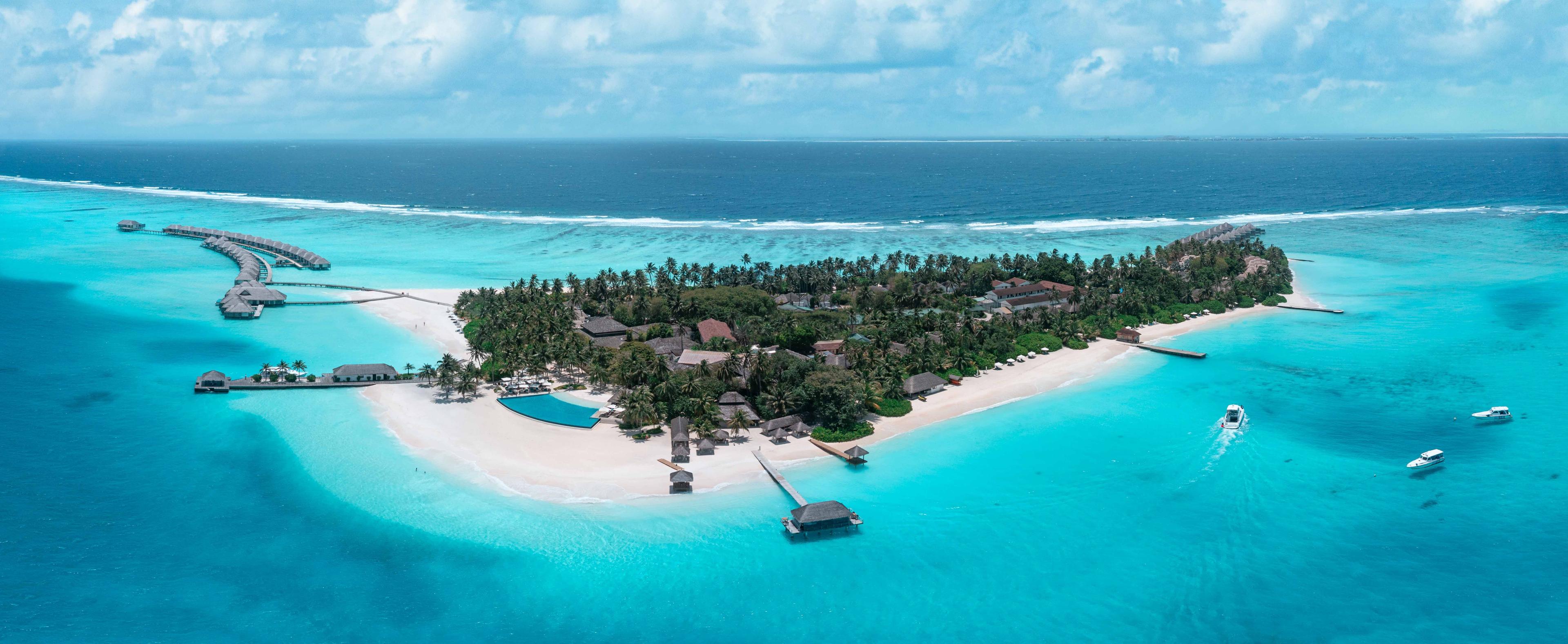
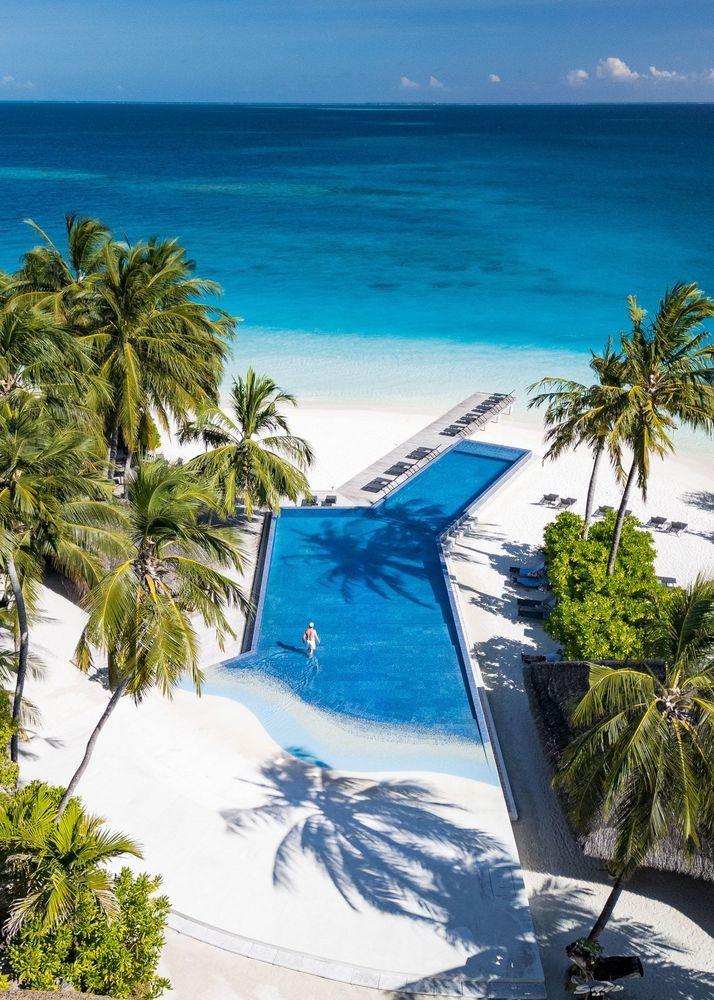
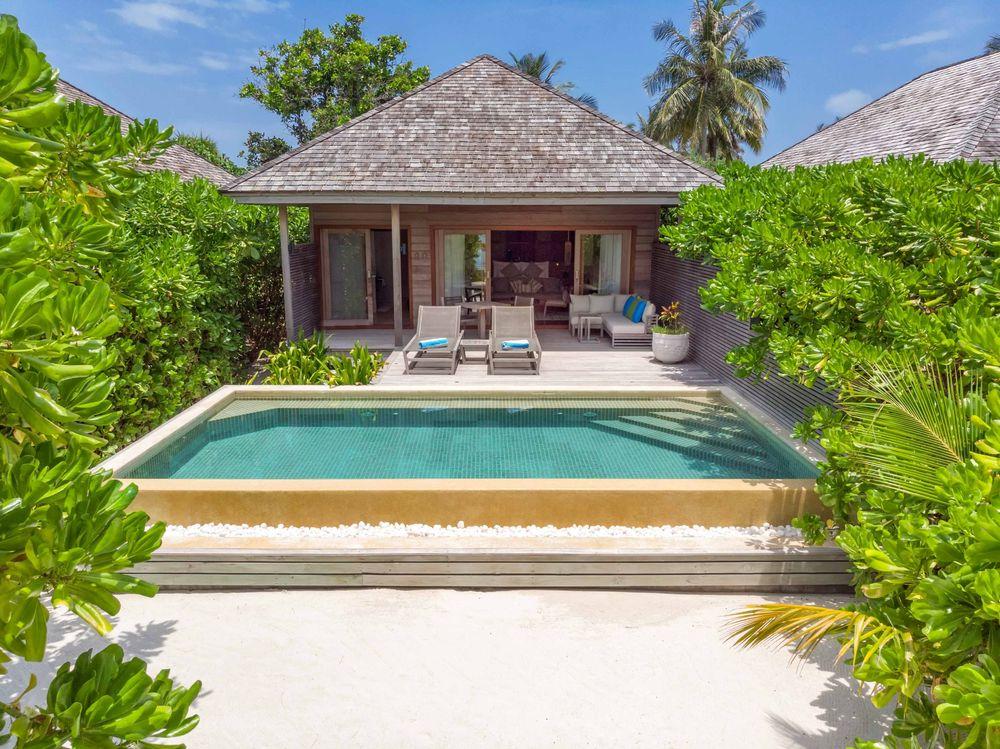
No, not every resort has a coral reef that you can easily access from the beach or water villas. Some resort islands are located on turquoise lagoons that are vast and without significant coral outcroppings. The reef's edge is also inaccessible for snorkelling, so these resorts tend to have scheduled snorkelling trips by boat to nearby reefs instead, such as the resort below:
House Reef Snorkelling and Snorkelling Excursions in the Maldives:
Further below, you will find some explanations of the different types of snorkelling activities and excursions that you can experience here in the Maldives:
House Reef Snorkelling
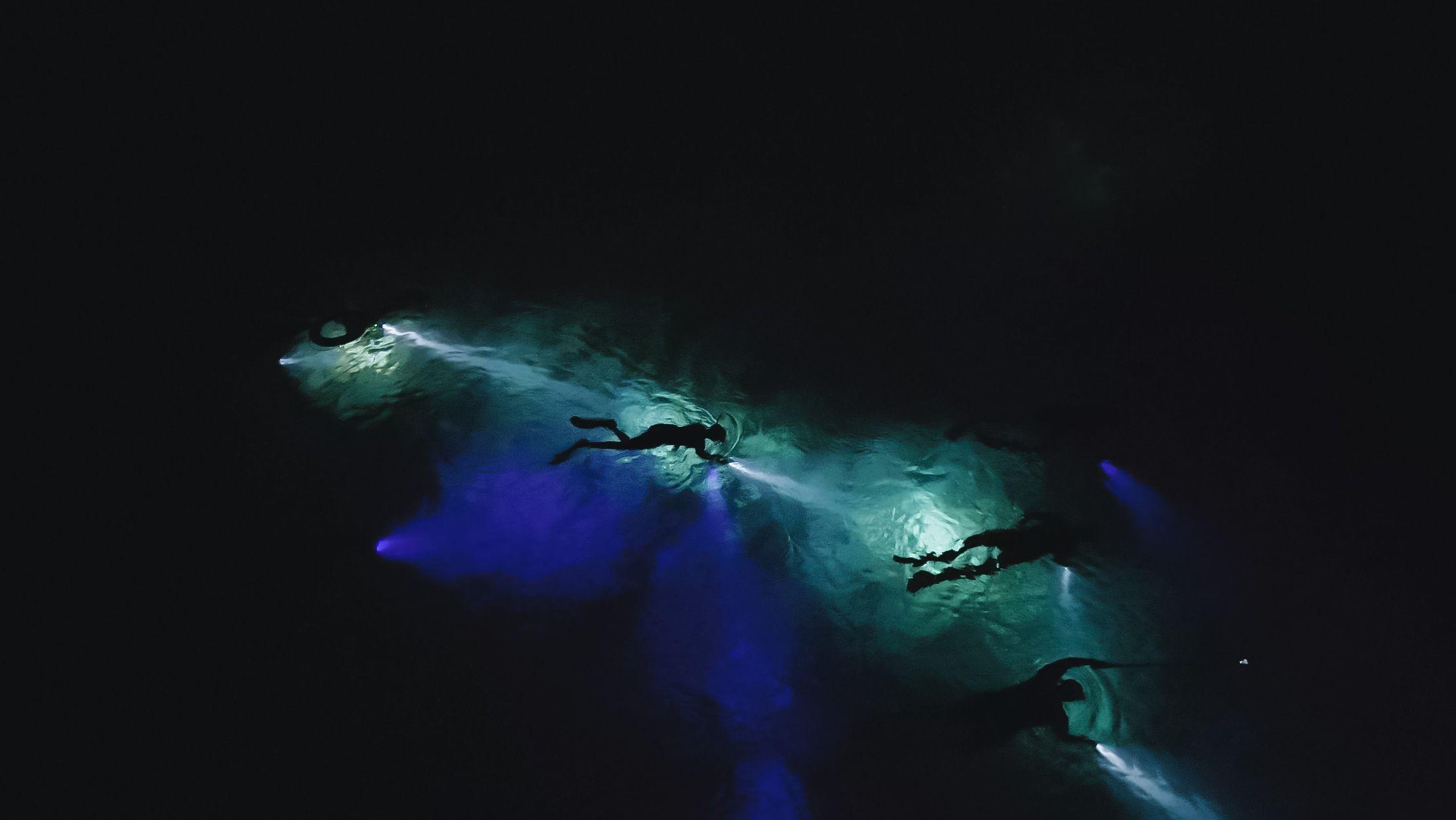
Night Snorkelling and Fluo Snorkelling (On the House Reef)
Snorkelling Safari (visit multiple reefs)
Manta Ray Snorkelling
Whale Shark Snorkelling
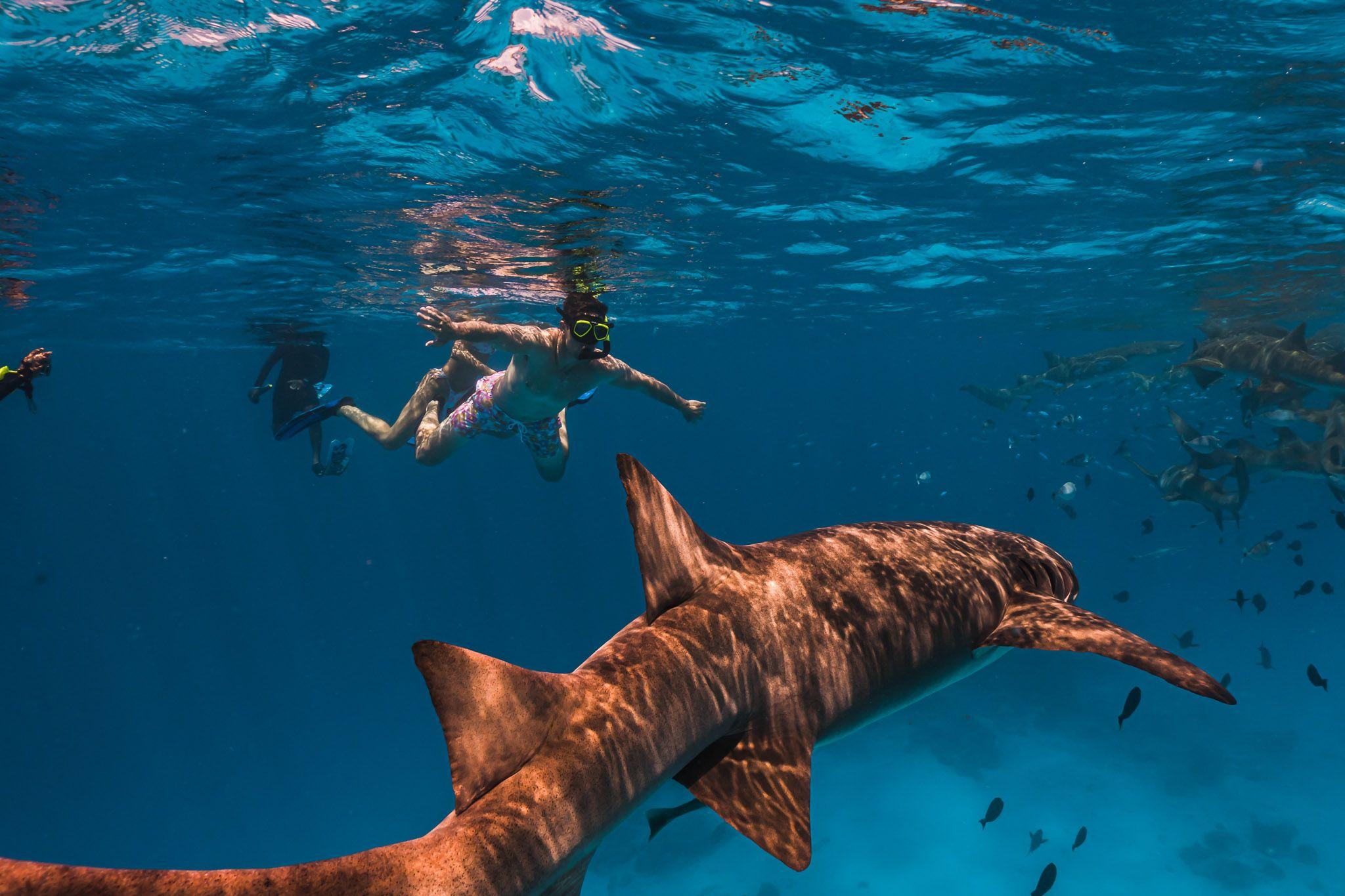
Nurse Shark Snorkelling
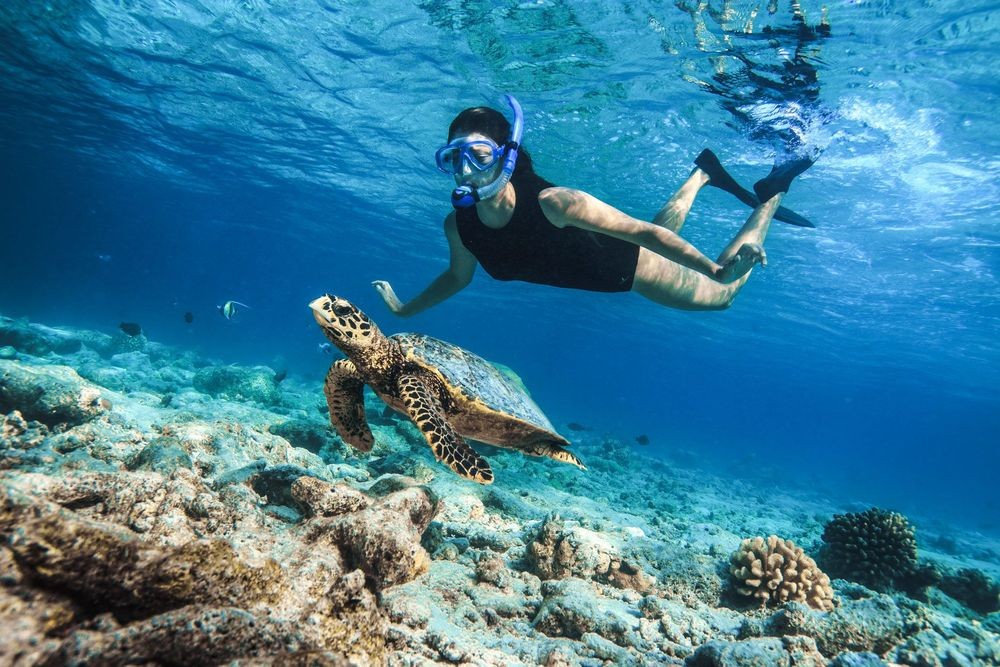
Turtle Snorkelling
Jet Ski Snorkelling Tours
Private Snorkelling Excursions
House Reef Snorkelling
Where to see this: House Reefs are usually accessible directly from the beach or water villas of your resort.
How to see this: You can go for a snorkel or a night dive (scuba diving)
What can you encounter: Colourful tropical reef fish, rays, sharks, eels, octopuses, soft and hard corals
Famous Locations: Best done at resorts with healthy house reefs
When: All year round, but the best underwater visibility is usually between February and April
Recommendation: First-time snorkellers should join a guided house reef tour to learn best practices and find the best spots.
Fun fact: A healthyhouse reef can attract turtles, sharks and rays and be filled with all kinds of tropical reef fish
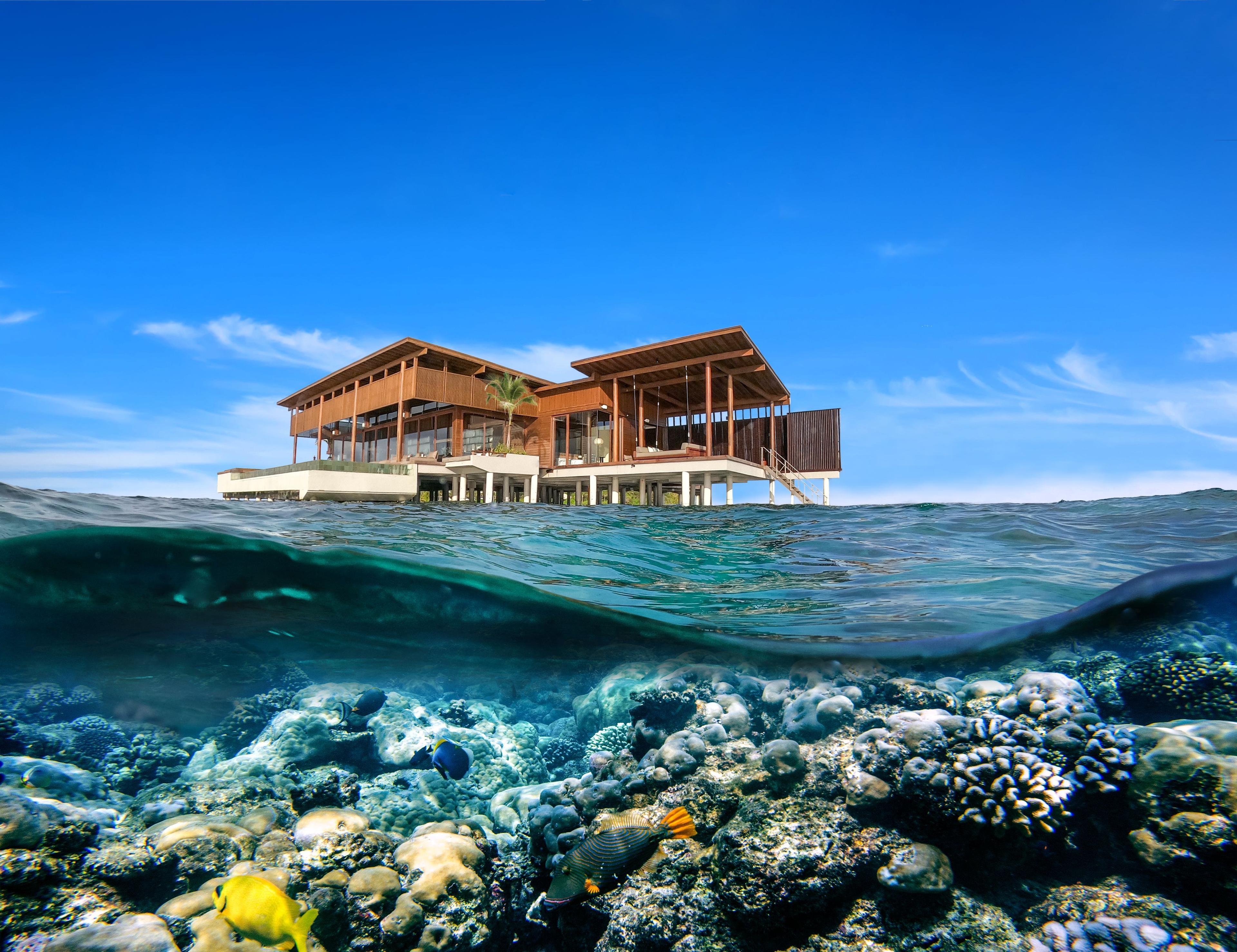
You can reach the house reef by swimming there from the beach, from your water villa or the overwater jetty that provides closest access. The coral reef fringing the island is usually demarcated where the turquoise waters meets dark blue ocean.
The best thing to do before going to explore a coral reef for the first time is to take part in a guided snorkelling tour. A guided tour of the resort's house reef can help orientate you and let's you know the best entry and exit points as well as help give you the best time of day to go out onto the reef.
Resorts with Stunning House Reefs
These resorts are popular with guests looking for a snorkelling holiday
Night Snorkelling and Fluo Snorkelling (On the House Reef)
Where to see this: The housereef around your resort (the excursion starts before sunset).
How to see this: You can go for a snorkel or a night dive (scuba diving)
What can you encounter: Nocturnal sea creatures, and depending on the site, you could see nudibranchs, shrimps and crabs, lemon sharks, and more.
Famous Locations: Best done at resorts with healthy house reefs
When: All year round, but the best underwater visibility is usually between February and April
Recommendation: This excursion is a snorkelling activity suitable for intermediate-level, more experienced snorkellers.
Fun fact: Nocturnal sea creatures come out at night when predators are not active on the reef, and they often have an otherworldly appearance. Exploring a coral reef after dark is a surreal snorkelling experience that you can try here in the Maldives. You'll see a lot of nighttime fish activity that doesn't happen during the day.
Night snorkelling is a sunset activity where you go out onto the house reef at dusk with an underwater torch to explore the nightlife. You need an underwater torch and a backup torch.
Fluo snorkelling is similar to night snorkelling, but in addition to a standard underwater torch, you use an underwater UV light. The UV light makes corals glow through biofluorescence.
Night Snorkelling in Maldives
Are Night Snorkelling and Fluo Snorkelling Safe?
When you go for a night snorkelling or fluo snorkelling session at the resort, you should always be accompanied by an experienced resort guide who leads the tour. As mentioned, the tour starts at sunset, so once it gets dark, you could lose your bearings if you don't know where to go. As the tour is a nighttime waterbound activity, it is important to always stick close to your guide and follow their safety recommendations/instructions to avoid getting lost or injured.
What can you see at Night on a Coral Reef?
you will see many underwater creatures that don't typically appear during the daytime. Tiny creatures that look as if they are from another planet, they come out at night when daytime predators go awau from the reef. Sightings include Nudibranch, different species of shrimp, crustaceans, sea cucumbers and other night creatures.
Snorkelling Safari (visit multiple reefs)
Where to go: Coral reefs can be found near and around your resort.
How to go: You can go on a boat on a dhoni tour (usually with other guests), book a private tour, or go on a jet-ski snorkelling tour (available at selected resorts)
What can you encounter: Sightings can occur across the Maldives, especially in the central atolls of the Maldives
Famous Locations: Every atoll of the Maldives has a lot of good snorkelling sites; we will share an atoll-specific guide later
When: All year round, but the best underwater visibility is usually between February and April
Recommendation: This excursion is a beginner-friendly snorkelling activity. If you are new to snorkelling, always tell your guide; they will help you get comfortable.
Fun fact: The Maldives is a popular destination for snorkelling holidays because there are many nice reefs to see near each resort.
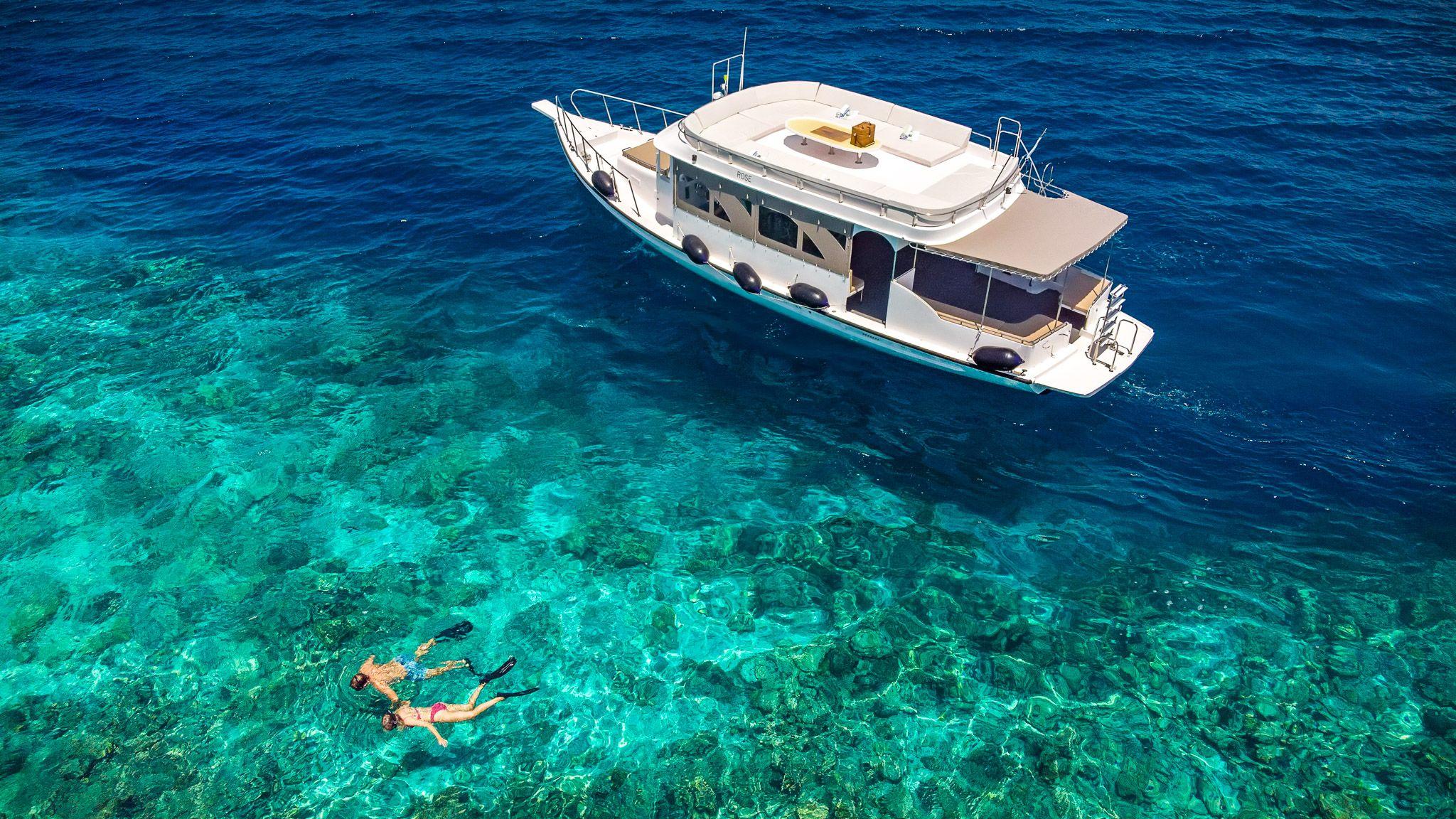
Booking a snorkelling safari is a fantastic way to explore multiple coral reefs near your resort. The most common mode of transport used for the excursion is a traditional Maldivian boat called a 'dhoni'. Snorkelling safaris (or snorkelling excursions) often provide a greater chance of seeing a wider variety of colourful fish, corals, sharks, rays, eels and so on, as there are plenty of coral reefs to see here in the Maldives.
Manta Ray Snorkelling
Where to see them: Manta feeding and cleaning stations, which could be near or far from resorts.
How to see them: You can snorkel or even scuba dive to see them; they usually swim in one location for a little while.
Chances of an encounter: Sightings can occur across the Maldives, especially in the central atolls of the Maldives
Famous Locations: Baa Atoll UNESCO Biosphere Reserve, Hanifaru Bay. Raa Atoll, while underrated, is particularly rewarding for manta ray spotting year-round.
When: All year round, but the best time of year is between May and November.
Recommendation: This excursion is a beginner-friendly snorkelling activity. If you are new to snorkelling, always tell your guide; they will help you get comfortable. Don't chase, don't touch
Fun fact: There are 5,000+ manta rays identified by the Manta Trust that are known to live in the Maldives
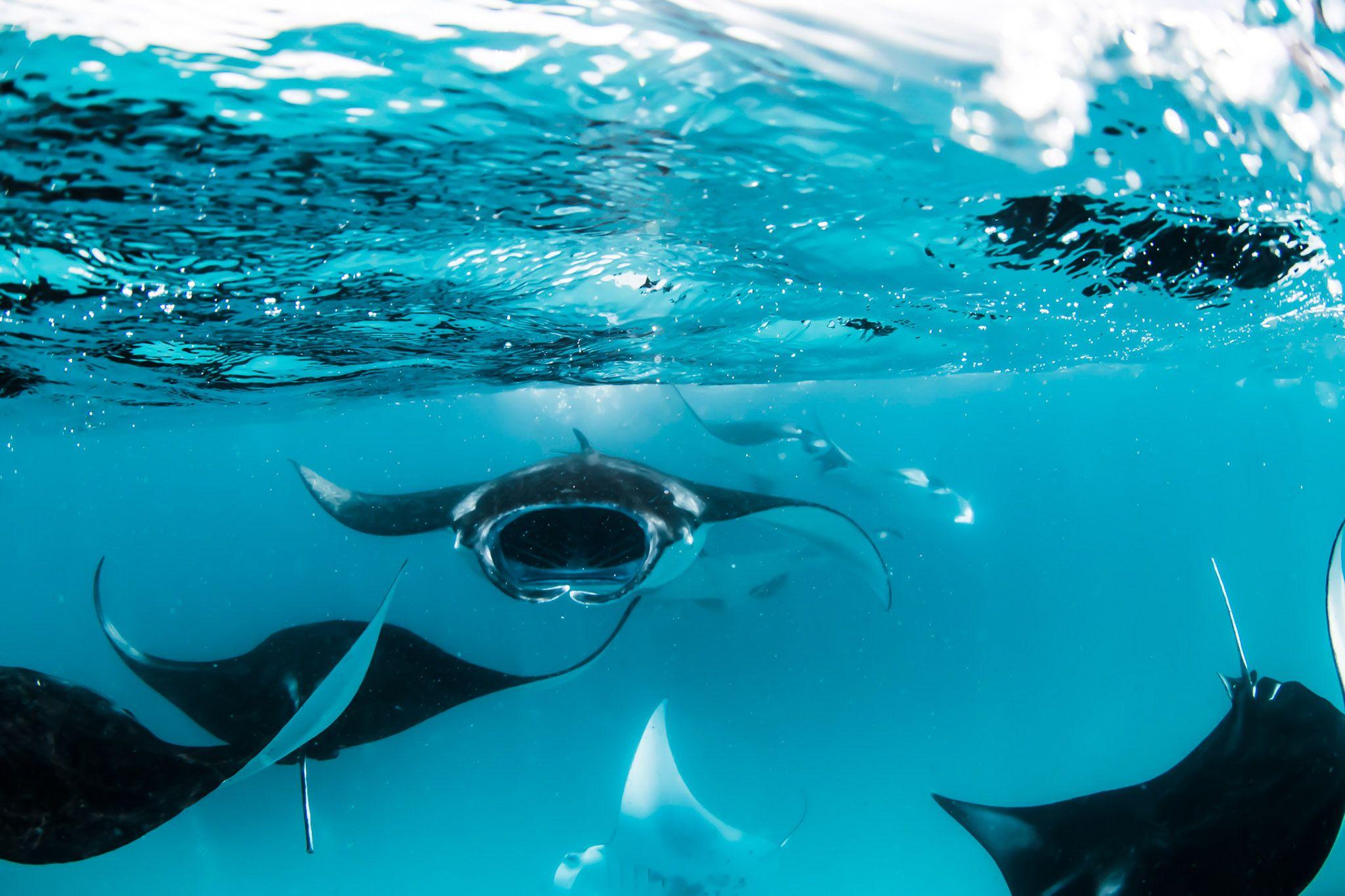
Manta rays can be found across the entire length of the Maldives. These majestic creatures are a sight to behold, and you can see them in the wild when you go for a snorkelling excursion. The best time to visit for manta sightings is between May and November. You can see hundreds of mantas at one time during the summer months in Baa Atoll, the world-famous UNESCO Biosphere Reserve, home to Hanifaru Bay. If you travel to other atolls, you will also find manta feeding and cleaning stations in various parts of each atoll. Raa Atoll is also a great place to visit for snorkelling with manta rays.
Whale Shark Snorkelling
Where to see them: In channels and the ocean around islands, near or far from resorts.
How to see them: You can snorkel with them; they are usually on the move.
Chances of an encounter: Sightings are rare across the Maldives, but South Ari Atoll is a particularly excellent region for seeing whale sharks.
Famous Locations: South Ari Marine Protected Area (SAMPA) in South Ari Atoll is recognised as the best; Baa Atoll UNESCO Biosphere Reserve and Bodu Hithi Thila are also known for whale shark sightings.
When: They can be seen year-round. The highest frequency of sightings has been between August and November; The best underwater visibility is between January and April.
Recommendation: This excursion is a beginner- to intermediate-friendly snorkelling activity, but you need to be confident in the water. If you are new to snorkelling, always tell your guide; they will help you get comfortable.
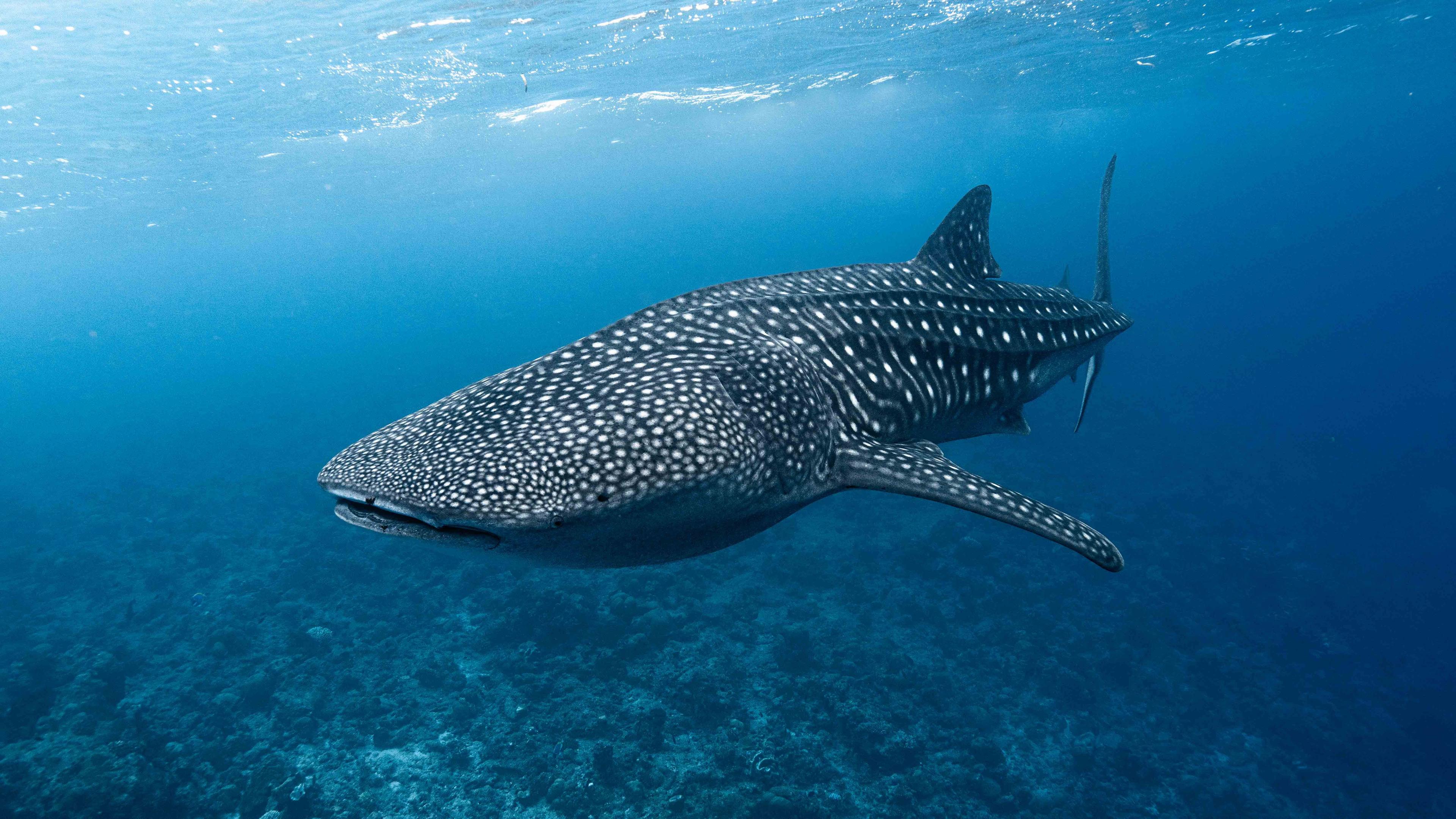
Fun fact: They belong to the order of sharks known as carpet sharks, "carpet" because of the intricate and mesmerising patterns found on the bodies of most sharks in this order.
Whale sharks are among the largest and most beautiful creatures that migrate through the Maldives and across the Indian Ocean. Despite their size, they don't eat large fish; whale sharks feed on plankton. These creatures are always on the move, and they travel vast distances, often thousands of kilometres, so when you spot them, you can consider yourself lucky, as they do not tend to hang around; they can be found passing through the Maldives more frequently during the Southwest Monsoon after a plankton bloom.
Nurse Shark Snorkelling
Where to see them: Vaavu Atoll and North and South Male Atoll are popular areas where you can see them
How to see them: You can snorkel with nurse sharks; they are mostly docile, practically harmless and move slowly through the water. As long as you stay a short distance away, you can have an incredible view of them. Avoid getting too close to them, reaching your hands or fins out towards them, and never touch one; they are wild animals and might misinterpret your intentions.
Chances of an encounter: Sightings are possible, with a high chance of encounters at specific locations.
Famous Locations: Vaavu Atoll has a few locations where you can see them; OBLU Select Sangeli has a snorkelling location with a 100% guarantee of sightings
When: Nurse sharks can be seen year-round in the Maldives
Recommendation: This excursion is a beginner- to intermediate-friendly snorkelling activity, but you need to be confident in the water. If you are new to snorkelling, always tell your guide; they will help you get comfortable.
Fun fact: Nurse sharks have smaller, fan-like teeth used for grinding their prey, unlike the long and sharp jagged teeth that people commonly associate with sharks. This is because their diet consists mainly of crustaceans, molluscs, and bottom-dwelling fish, prey that often have hard shells
Nurse sharks can grow up to 4 metres long, but despite their size, they aren't aggressive creatures. They are often referred to as the "puppies of the ocean" because of their gentle nature. Nurse sharks are calm and graceful in the water and offer an amazing snorkelling experience, as they are truly wonderful to observe.
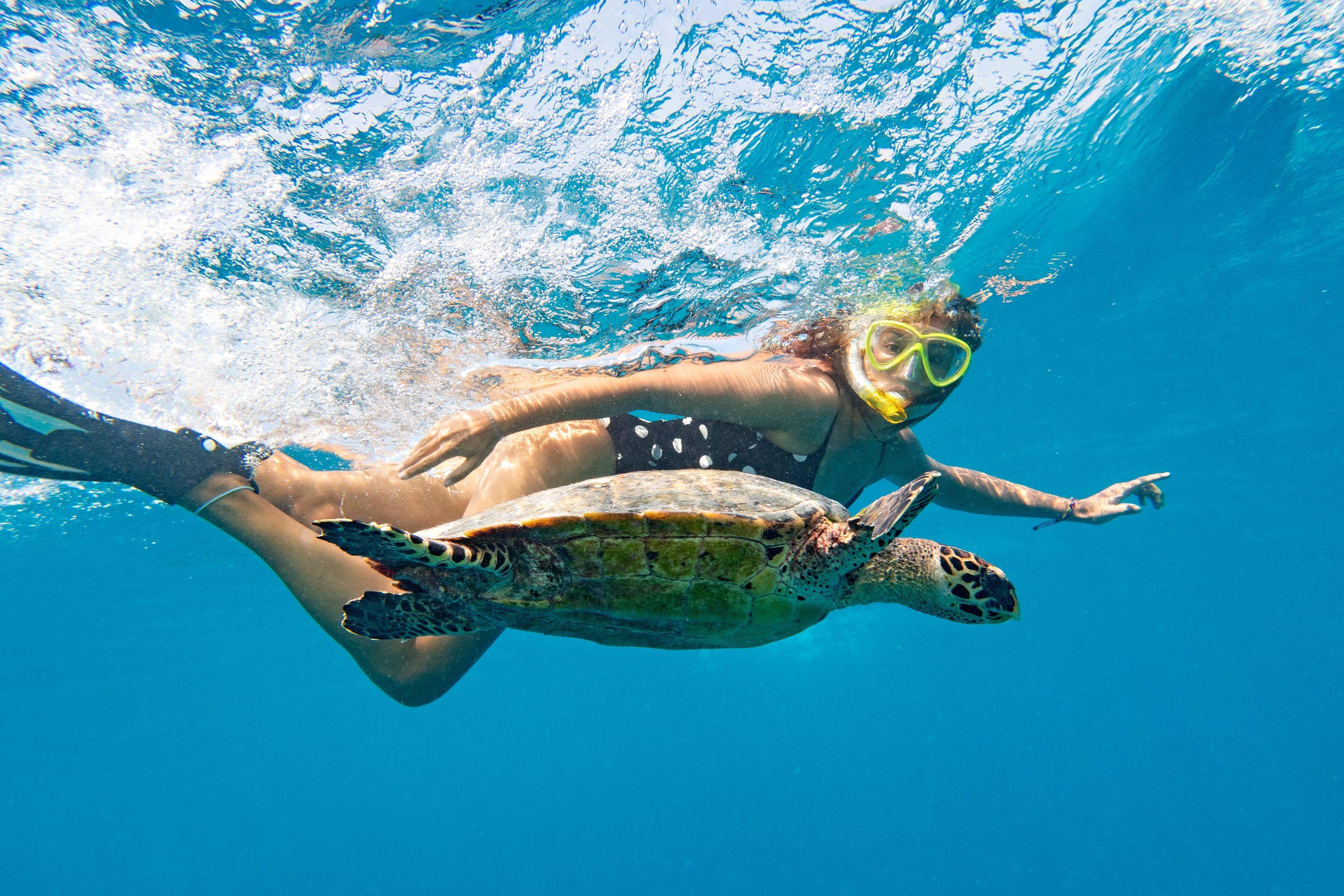
Turtle Snorkelling
Where to see them: They can be found in any atoll in the Maldives.
How to see them: You can spot them on snorkelling excursions; they usually go down to feed and come up for air. Try not to crowd the turtle as it tries to surface so that it gets a chance to breathe without getting scared.
Chances of an encounter: Sightings are possible throughout the Maldives.
Famous Locations: There are many places where they can be found across many atolls of the Maldives, Baa Atoll and Raa Atoll, which usually have good chances for sightings
When: They can be spotted throughout the year; on a typical day, you can find them during the day, mid-morning (08:30 to 11:30) or in the late afternoon (14:30 to 16:30).
Recommendation: This excursion is usually a beginner-friendly snorkelling activity, but you need to be confident in the water. If you are new to snorkelling, always tell your guide; they will help you get comfortable.
Fun fact: five of the world's seven known turtle species can be found in the Maldives; they are also known to make nests and lay their eggs all over the Maldives
You can find turtles on reefs all over the Maldives. They are also commonly found in areas with seagrass. Turtles are generally not afraid of humans, although you must avoid touching or disturbing them; a snorkelling trip is a great way to spot them in the wild. You can also support turtle care and conservation through The Olive Ridley Project, which treats sick and injured turtles until they are ready to go back into the ocean.
Jet Ski Snorkelling Tours (visit multiple reefs)
Where to go: Coral reefs can be found near and around your resort.
How to go: You go with a guide on jet skis; you travel to nearby sites, moor the skis and go snorkelling.
What can you encounter: You can go to a variety of nearby sites, and you have the flexibility to travel somewhere else if you don't find the aquatic creature you are looking for.
Famous Locations: Every atoll of the Maldives has a lot of good snorkelling sites; we will share an atoll-specific guide later
When: All year round, but the calmer sea conditions and best underwater visibility are usually between February and April
Recommendation: This excursion is an intermediate snorkelling activity; you will also be driving a jet ski.
Fun fact: Jet ski snorkelling is a thrilling way of visiting multiple reefs, great for couples or a group of friends
You will always be accompanied by a guide who will lead you to nearby snorkelling sites and look after you during the excursion. There is also a small chance that you will spot dolphins while crusing on a jet ski which is always an added bonus.
Where to go: Coral reefs can be found near and around your resort.
How to go: You travel on a private speedboat (usually a four- to six-seater), decide the time and plan where to go
What can you encounter: You can go to various nearby sites, and you have the flexibility to travel somewhere else if you prefer.
Famous Locations: Every atoll of the Maldives has a lot of good snorkelling sites; we will share an atoll-specific guide later
When: All year round, but the calmer sea conditions and best underwater visibility are usually between February and April
Recommendation: This excursion is a beginner-friendly snorkelling activity; it is great for families, friends and couples too
Fun fact: A private snorkelling excursion is a comfortable and convenient way of visiting multiple reefs, ideal for couples or a group of friends.
Your boat will be driven by a speedboat captain, and a guide will always accompany you, leading you to nearby snorkelling sites and looking after you during the excursion. You could also visit sandbanks or look for specific sea animals such as manta rays during your excursion.
Snorkelling Health and Safety: Avoid Injury and Harm Prevention
Personal Safety
Wear a life jacket if you find it difficult to float in the ocean or you are not a strong swimmer. You can request one from the scuba diving centre or from the resort's reception if you do not find one in your room.
Call the scuba diving centre or resort reception to check the sea conditions on the house reef beforesnorkelling. Ask them to let you know where there might be strong currents and where to avoid snorkelling, as well as low- and high-tide timings.
Never snorkel alone; always go snorkelling with a buddy so that you can look after each other.
Avoid snorkelling in an area of boat activity, such as the arrival/departure jetty or service jetty.
You should also avoid swimming in areas marked as unsafe on the resort map, such as no-snorkelling zones and exercise caution in areas labelled as having strong currents.
Marine Animal Safety
Never touch corals; every coral reef is fragile, and the simplest touch, whether or not accidental, could kill the coral.
Avoid touching or chasing fish; some species of fish are poisonous, have stings or secrete venom
Do not touch or pick up shells underwater; some colourful sea snails have venom that could prove fatal with a single dose.
Ordinary sunscreen damages and kills corals; always purchase and use reef-safe sunscreen when coming for a holiday to the Maldives. (If in doubt, always look up the brand and its ingredients to see if they are reef-safe.)
Snorkelling Holiday Deals
Here is a list of snorkelling holiday deals at resorts with nice house reefs that have great discounts if you book early.
While not everything on this list is essential, most are recommended for passionate snorkellers.
Swimwear and UV rash guard
Do not forget your swimwear when you travel to the Maldives. You might be able to buy some swimwear if it completely slipped your mind, but don't count on it. It's recommended to bring one, or ideally two, UPF 50+ UVA and UVB-resistant long-sleeve rash guards, especially if you intend to swim in the sea frequently. Having two or more sets of swimwear is ideal, as you can dry or wash one set while using the other, ensuring you always have a fresh set.
A UV rash guard provides UPF 50+ sun protection to block harmful ultraviolet rays and prevents skin irritation or rashes caused by accidental impacts with corals, rocks, or sea creatures. Full-length arm coverage is essential. The T-shirt variety of rash guard is not very effective at protecting you. You can also get rash guard leggings for added protection.
Snorkelling Mask (goggles), snorkel & fins
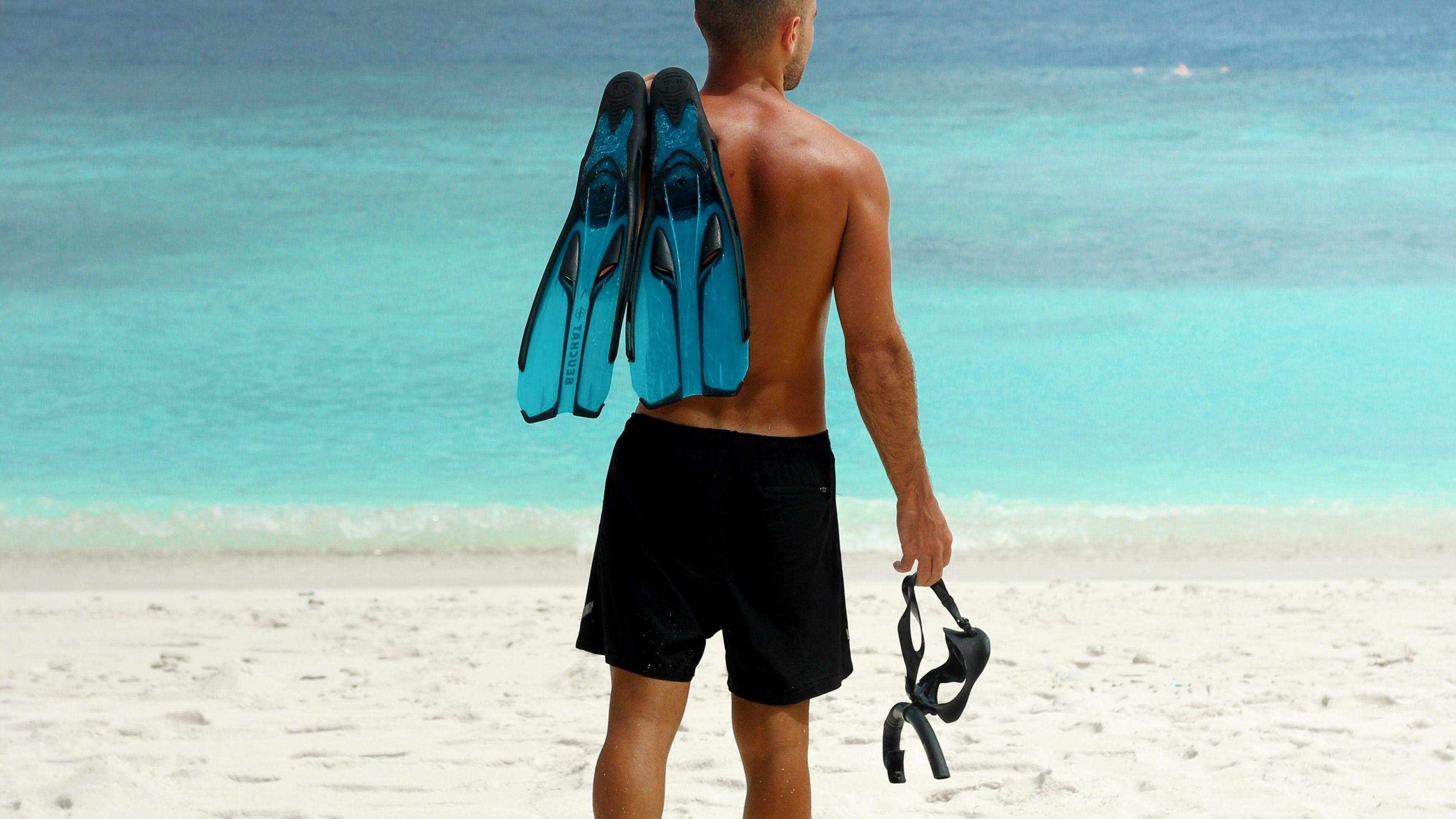
Masks, fins, and snorkels are available for rent or free use at most resorts, but buying a decent mask for yourself makes sense if you want one that fits your face comfortably rather than a generic one-size-fits-all model. Getting a snorkel is also recommended for comfort and a perfect seal
What we mean is buying your own snorkelling goggles; full-face masks can be dangerous when they leak, so we don't recommend them, especially for novice snorkellers. Rental gear can be a little worn, and a leaky mask is especially annoying when you're already out on an excursion.
You could bring your own fins (if you have a nice set of long fins, for example), but using the ones provided by the resort is often perfectly adequate.
Reef-safe sunscreen
We covered this and a few other essential in another article about what to pack when you are visiting the Maldives, we cannot stress enough that if you buy sunscreen before travelling to the Maldives Make sure its Reef Safe Sunscreen!
Select a reef-safe, waterproof mineral sunscreen to avoid harming coral and marine life. Look for active ingredients like titanium dioxide and zinc oxide, which are naturally occurring minerals safe for the ocean. We recommend mineral sunscreens, also known as physical sunscreens, in lotion form rather than spray form to reduce the risk of inhalation. Avoid chemical sunscreens, as they can harm marine life. These sunscreens absorb UV rays instead of acting as a barrier. Check the product label and avoid ingredients ending in -benzone, -salate, -lene, -xate, or -mate, as even small amounts can damage coral.
Waterproof dry bag
Drybags not only keep your travel essentials dry, but they also float if there's trapped air inside the bag. perfect if you plan on going to a sandbank during your excursion or wanted to keep your mobile phone and room keycard from getting wet.
Underwater camera or Action Camera
You can also rent this at most resorts but If you love capturing stunning content about water sports, marine life, or vlog-style content about your travels, bringing an action camera is a great idea.
Remember to pack spare batteries in your hand luggage as most airlines now require you to keep lithium batteries in the cabin rather than the plane's hold due to safety concerns. If you plan to film in the water, bring a floating mount to prevent losing your camera in the ocean, don't forget to also pack a memory card for your action camera.
Reusable water bottle
If you decide to bring a reusable water bottle for your holiday, please choose your water source carefully. Finding a filtered water source. Drinking unfiltered water is not recommended.
Common questions about snorkelling in the Maldives
Snorkelling FAQS
Here are a list of frequently asked questions from guests interested in snorkelling
REQUEST HOLIDAY QUOTES
Receive Exclusive Deals and Holiday Offers with Ease
Filling in our step-by-step wizard helps us to find you the best holiday offers and deals that we can share exclusively with you.